
Environmental Radioactivity (Dosimetry) & Radiation Applications
The Laboratory’s research in Environmental Radioactivity (Dosimetry) and Radiation Applications focuses on the study of radionuclides, the detection and measurement of radioactivity, the investigation of radiation-matter interactions, and the development of dosimetric methodologies for environmental, research, and technological applications.
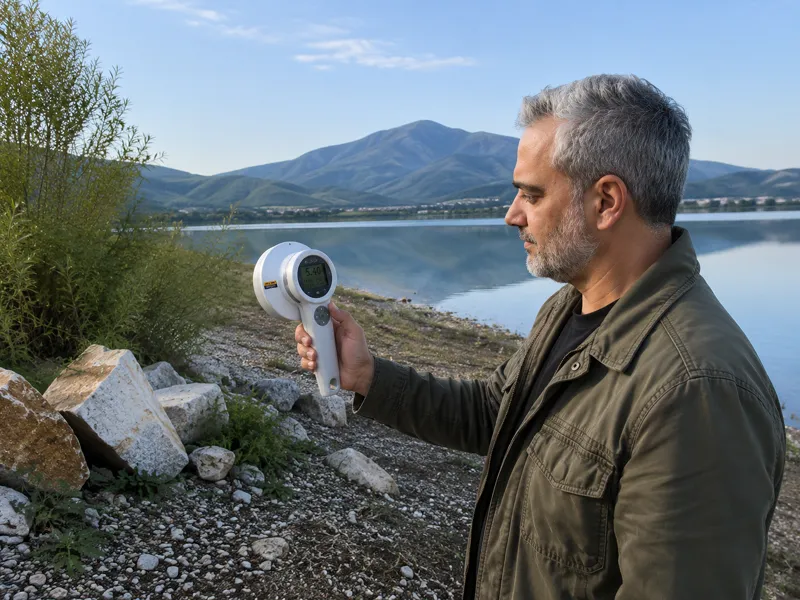
One of the main research directions concerns environmental dosimetry and the study of the distribution of natural and artificial radionuclides in environmental and geological samples, as well as the assessment of parameters associated with exposure to ionizing radiation. The research activities include gamma-ray spectrometry applications, background radiation studies, the development of methodologies for radionuclide detection and quantification, and radioactivity measurements in the environment and in geological or construction materials.
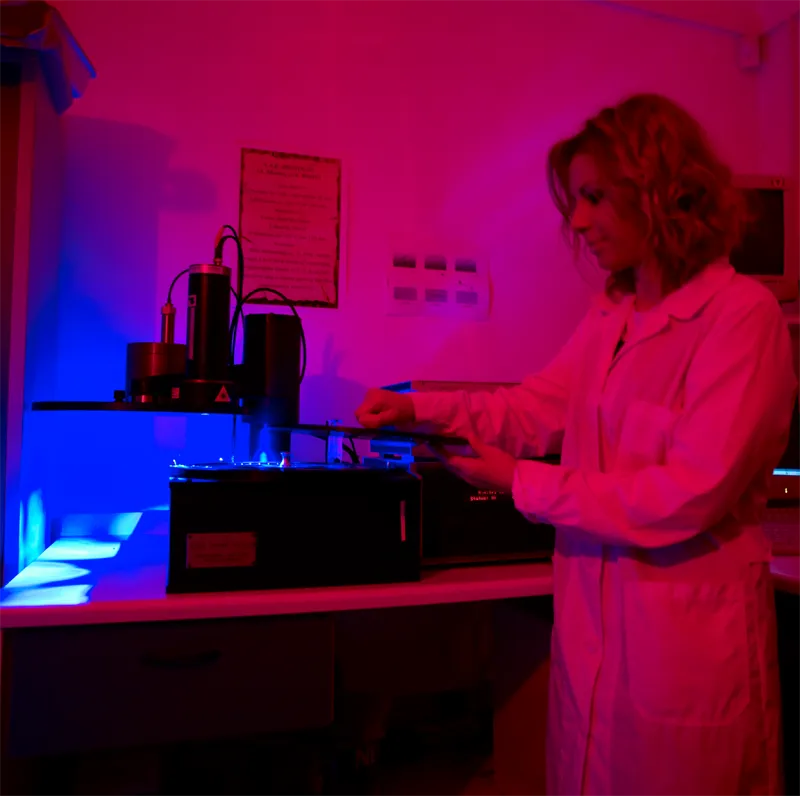
At the same time, the Laboratory conducts research in luminescence dosimetry and the dating of archaeological and geological materials, with emphasis on thermoluminescence (TL) and optically stimulated luminescence (OSL) techniques. The research focuses on investigating the luminescence properties of dosimetric materials and assessing their suitability for use as dosimeters. These activities support applications in personal dosimetry, accidental dosimetry, and post-irradiation dosimetry. More specifically, personal dosimetry concerns the estimation of the ionizing-radiation dose received by an individual during occupational or environmental exposure, with applications in worker radiation protection and exposure monitoring. Accidental dosimetry focuses on the retrospective estimation of dose following incidents of accidental or uncontrolled radiation exposure, using dosimetric materials and luminescence techniques to assess exposure levels. Post-irradiation dosimetry concerns the verification of the use of ionizing radiation in the sterilization of food, pharmaceutical products, and other materials through the detection and evaluation of irradiation-induced changes in suitable dosimetric or functional materials.