
Microalgal Bioprocesses & Physicochemical Applications
The study of biological and physicochemical processes involving microalgae is one of the Laboratory’s main research directions, with emphasis on the investigation, cultivation, and utilization of microalgae for environmental, energy, and biotechnological applications. The research combines physicochemical analyses, biological processes, sensor technologies, and computational approaches to optimize growth conditions and investigate innovative microalgal applications in circular-economy and sustainable-development systems.
A central role is assigned to the study of interactions between microalgae and environmental pollutants, particularly heavy metals, through the investigation of biosorption, bioaccumulation, and pollutant-removal mechanisms in aquatic systems. The research activities include laboratory- and pilot-scale studies on the use of microalgae for the bioremediation of contaminated natural and surface waters, including lakes and rivers, and for wastewater treatment.
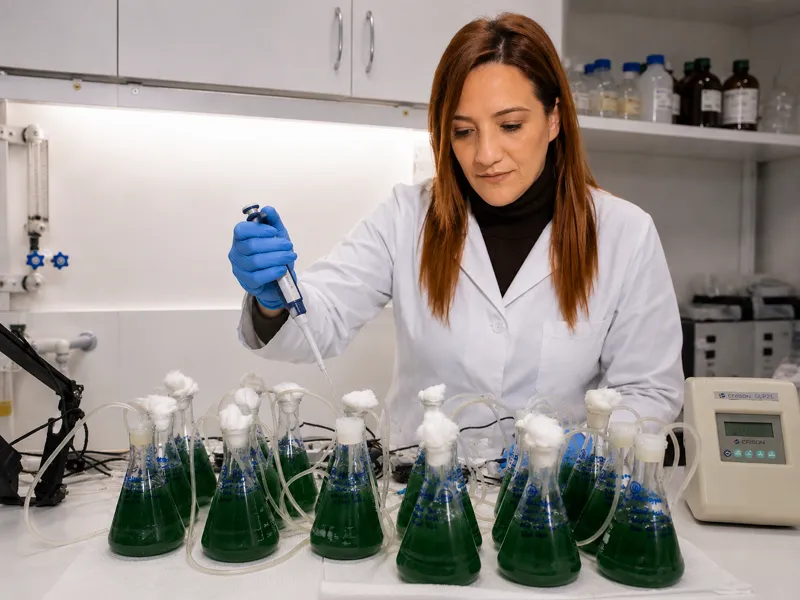
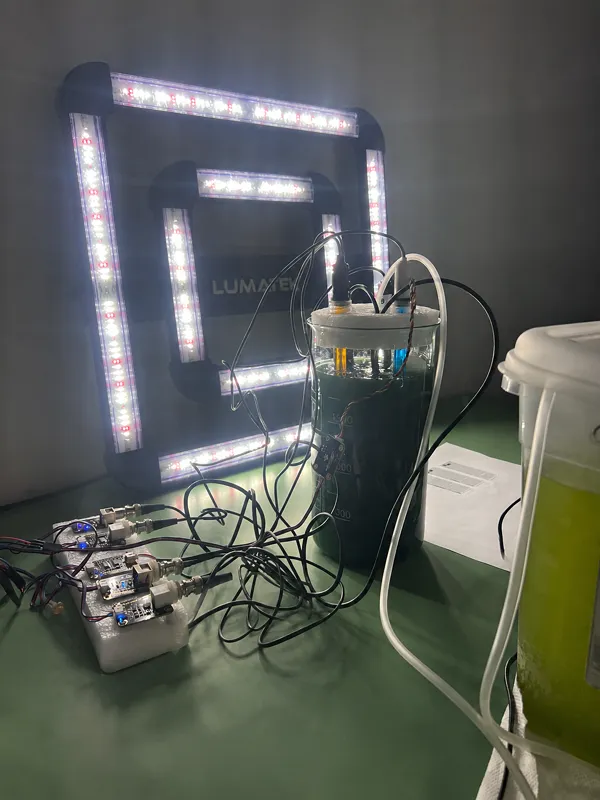
In addition, the Laboratory develops innovative approaches for optimizing microalgae cultivation using controlled bioreactors and advanced physicochemical configurations. A significant component of the research concerns the development and use of a microbubble system to enhance the transfer of CO₂ required for photosynthesis, optimize growth conditions, and improve microalgal cultivation performance.
Research in the same field also aims to develop intelligent systems for monitoring and optimizing microalgae cultivation using IoT technologies, sensors, and artificial intelligence. Within this context, continuous-monitoring approaches for physicochemical parameters and computational machine-learning models are developed to predict and optimize microalgal growth under different environmental conditions.
The Laboratory also investigates applications of microalgae in energy production, particularly bioelectrochemical electricity generation, through the study of biological and physicochemical processes and the integration of microalgae into innovative energy systems. The research focuses on investigating electricity-generation mechanisms and the potential integration of microalgae into sustainable energy and environmental applications.